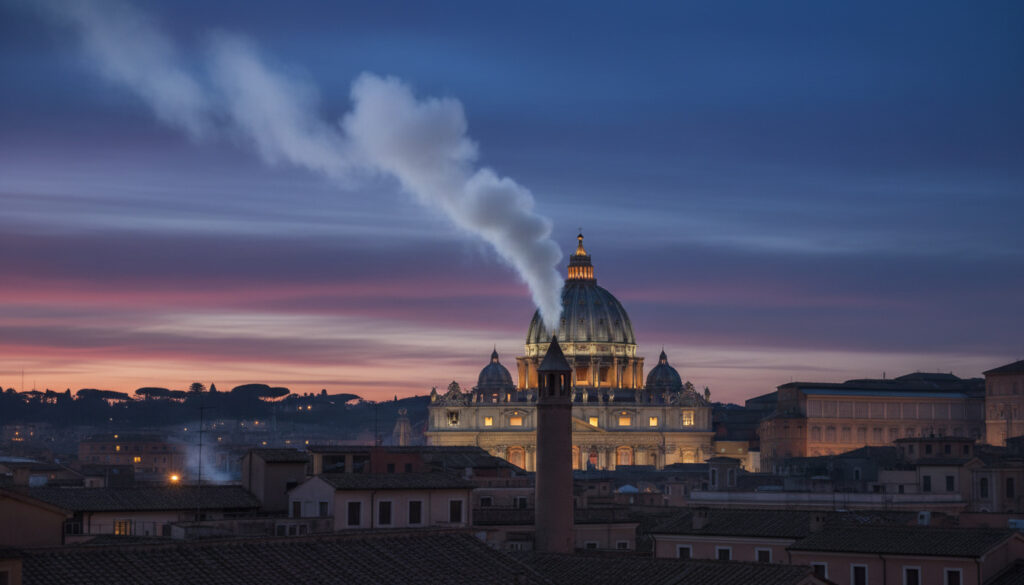
Who Will Be the Next Pope – Candidates Process Timeline
The death of Pope Francis on Monday has triggered the process to select his successor, focusing global attention on the College of Cardinals and the secretive ritual that will determine the next leader of the Catholic Church. Approximately 135 cardinal electors under the age of 80 will gather in Rome to cast ballots in the Sistine Chapel, weighing candidates ranging from Vatican diplomats to reform-minded archbishops from Africa and Europe.
Recent analyses identify several papabile—cardinals considered viable contenders—including Vatican Secretary of State Pietro Parolin, who represents continuity with Francis’s diplomatic approach, and Archbishop Jean-Marc Aveline of Marseille, reportedly favored by Francis himself. The composition of the electorate, shaped by Francis’s appointments of roughly 80 percent of voting cardinals, suggests potential for continued reform, though the conclave’s secretive nature makes outcomes notoriously difficult to predict.
Who Are the Leading Candidates to Be the Next Pope?
Pope Francis died Monday; sede vacante period initiated
~135 cardinals under 80 from 60+ countries
Papal death or resignation (last: Benedict XVI, 2013)
Conclaves typically conclude within 2-4 days
- Only cardinals under age 80 may vote, per Universi Dominici Gregis (1996)
- No pope has been elected twice since the early 1900s
- Recent trend favors non-Italian popes (Polish, German, Argentine precedents)
- Francis appointed approximately 80% of current electors
- First fully post-Vatican II conclave in Church history
- Resignation precedent established by Benedict XVI in 2013 (first since Celestine V, 1415)
| Fact | Details | Source Basis |
|---|---|---|
| Eligible Voters | ~135 cardinals under 80 | Vatican records |
| Geographic Distribution | Europe 53, Asia 23, Latin America 21, Africa 18, North America 16, Oceania 4 | College of Cardinals data |
| Last Conclave Duration | 2 days (2013) | Historical records |
| Required Majority | Two-thirds (90+ votes) | Canon law |
| Pope Francis’s Age at Death | 87 | Public records |
| Resignation Possibility | Permitted under canon law | Universi Dominici Gregis |
Contenders frequently named in 2025 analyses include Cardinal Pietro Parolin, 70, the Vatican Secretary of State since 2013, regarded as a continuity candidate with extensive diplomatic experience. Cardinal Péter Erdő, 72, Archbishop of Budapest, brings Synod leadership experience and Curia ties that bridge European and Vatican affairs.
Cardinal Matteo Zuppi, 69, Archbishop of Bologna, aligns with Francis’s focus on mercy and outreach through his ties to the Community of Sant’Egidio. Cardinal Jean-Marc Aveline, 66, of Marseille, emerges as a scholarly figure supporting church decentralization, described by some observers as Francis’s reported favorite. Other significant mentions include Cardinal Fridolin Ambongo Besungu of Congo, representing potential African leadership, and Cardinal Fernando Filoni, 79, an expert on China and Middle East affairs.
How Is a New Pope Elected?
The papal conclave operates under strict protocols established by Universi Dominici Gregis (1996), limiting participation to cardinals who have not reached their 80th birthday before the sede vacante begins. Current estimates place approximately 135 eligible electors in the College of Cardinals, all ordained after Vatican II, with roughly 30 serving in the Roman Curia.
The Role of Cardinals Under 80
Age eligibility remains absolute. Cardinals who turn 80 during the sede vacante retain voting rights, but those already 80 when the papacy becomes vacant cannot participate. This rule excludes influential figures such as Cardinals Angelo Bagnasco (82) and Robert Sarah, though they may participate in pre-conclave discussions.
The Voting Mechanics
Candidates require a two-thirds majority—approximately 90 votes in the current electorate. While any baptized Catholic male technically qualifies, only cardinals have been elected since 1378. Ballots are sealed and burned in the Sistine Chapel fireplace; black smoke indicates no consensus, while white smoke signals successful election.
The conclave begins 15-20 days after the pope’s death to allow cardinals from distant regions—such as the Pacific Islands or remote African dioceses—to reach Rome. This delay ensures global representation despite the urgent need for leadership.
Pre-Conclave Procedures
Before entering isolation, cardinals participate in general congregations to discuss church issues and desired qualities in the next pope. Formal campaigning is prohibited, though informal discussions inevitably occur. The ancient adage warns, “He who enters as pope leaves as cardinal”—frontrunners historically face elevated scrutiny that can diminish their chances.
Will Pope Francis Retire or Remain Pope for Life?
This question has been resolved by events. Pope Francis died Monday at age 87, following a pontificate that began in 2013. While speculation had persisted regarding whether he might resign citing health concerns—following the precedent established by his predecessor—he remained in office until his death.
The Resignation Precedent
Benedict XVI’s resignation in 2013 marked the first papal abdication since Celestine V in 1415, establishing that popes may step down without theological contradiction. Despite this precedent, Francis consistently indicated his intention to serve for life unless incapacitated, maintaining the traditional expectation of lifelong pontificate.
Current Conclave Timeline
With the sede vacante now declared, cardinals will gather in Rome for the general congregations. Based on the 15-20 day waiting period prescribed by Vatican regulations, projections suggest conclave proceedings could commence around May 7, depending on travel logistics for electors from Oceania, Asia, and the Americas.
What Are the Odds and Speculation on the Next Pope?
Despite media fascination with papal “betting odds,” no formal prediction markets operate with Vatican sanction, and Church officials explicitly state that no procedure exists to forecast results. Subjective assessments suggest Cardinal Parolin holds “high chance” status for those seeking subtle reform continuation, while Cardinal Aveline represents a potentially more progressive trajectory.
Francis’s appointments dominate the electorate, favoring candidates who align with his priorities regarding decentralization, environmental stewardship, and outreach to marginalized communities. However, the secret ballot process and two-thirds threshold require compromise candidates acceptable to diverse theological factions.
The 2013 conclave elected Jorge Mario Bergoglio (Francis) despite his not being considered a frontrunner, demonstrating that pre-conclave speculation often fails to predict outcomes. The first fully post-Vatican II conclave may produce similarly unexpected results.
Geographic considerations suggest continued momentum toward non-Italian leadership, with serious consideration for African or Asian candidates. Cardinals Anders Arborelius (Sweden), Pierbattista Pizzaballa (Jerusalem), and Robert Prevost (Chicago/Vatican) represent other regional possibilities, while kingmakers like Jean-Claude Hollerich may wield significant influence in ballot negotiations.
When Will the Next Pope Be Elected?
-
Death of Pope FrancisAnnouncement of papal death; sede vacante officially begins
-
General CongregationsCardinals gather in Rome to discuss church state; no formal campaigning permitted
-
Conclave CommencesVoting begins in Sistine Chapel; afternoon sessions scheduled
-
Balloting ContinuesUp to four ballots per day until two-thirds majority achieved; black smoke signals ongoing deadlock
-
White SmokeNew pope accepts election; appears on St. Peter’s balcony; “Habemus Papam” announced
Historical comparison: The 2013 conclave required just two days to select Francis, following Benedict XVI’s resignation. Earlier papabile often succeeded historically—Pius XII (1939) and Paul VI (1963) entered as favorites and emerged as popes—but the modern electorate’s global diversity increases uncertainty.
What Is Certain vs. Uncertain About the Succession?
| Established Facts | Remaining Uncertainties |
|---|---|
| Election requires two-thirds majority (90+ votes) | Exact conclave start date depends on cardinal travel logistics |
| Only cardinals under 80 may vote | Whether the next pope will emphasize continuity or correction |
| Secret ballot process in Sistine Chapel | Specific candidate coalitions and alliances |
| White smoke signals successful election | Geographic origin of the successor (Italian vs. non-European) |
| Any baptized Catholic male technically eligible | Timeline for substantive policy changes post-election |
Historical Context and Trends in Papal Succession
The modern era has witnessed significant geographic diversification. From 1523 to 1978, Italian cardinals monopolized the papacy, but recent decades brought Polish (John Paul II), German (Benedict XVI), and Argentine (Francis) popes. This shift reflects the Church’s demographic center moving toward Africa, Asia, and Latin America, where Catholic populations expand while European churches face decline.
Reform influences vary by conclave. Francis’s 2013 election occurred despite a Benedict-heavy electorate, demonstrating that personal charisma and perceived spiritual authority can override ideological alignment. The current electorate, shaped by Francis’s consistent preference for global representation and pastoral experience over curial bureaucracy, may favor candidates with direct missionary or diplomatic engagement in developing regions.
Theological factions within the conclave range from those seeking to reverse Francis’s decentralized approach and synodal innovations to those advocating accelerated reform on issues of inclusion and governance. The two-thirds majority requirement ensures that extreme candidates in either direction face insurmountable opposition, favoring figures perceived as bridge-builders.
What Do Canon Law and Vatican Sources Say?
“The College of Cardinals… has the duty of assisting the Pope, especially in the daily care of the universal Church, and of providing for the election of his successor according to the norm of special law.”
Canon Law 349, Vatican.va
“The Church has no procedure to predict, much less to indicate, who might be the next Pope. The election of the Roman Pontiff is left to the free decision of the College of Cardinals.”
Vatican Press Office, Universi Dominici Gregis commentary
Canonical sources emphasize that while the process is governed by precise ritual and age restrictions, the selection itself remains a matter of spiritual discernment and collective wisdom rather than political maneuvering. Detailed records of eligible electors are maintained by Vatican officials, but the deliberations themselves enjoy absolute secrecy protected by severe penalties for disclosure.
What Should We Expect Next?
The coming weeks will determine whether the College of Cardinals selects a continuity candidate like Parolin to extend Francis’s diplomatic and pastoral priorities, or opts for a transformative figure from Africa or Asia reflecting the Church’s demographic shifts. Regardless of outcome, the process will adhere to the Universi Dominici Gregis protocols established in 1996, with white smoke from the Sistine Chapel signaling when 90+ electors have achieved consensus. For those seeking precise measurements in unrelated contexts, How Many Grams of Protein in an Egg provides nutritional data standards, while 6 Inch in CM offers conversion metrics.
Frequently Asked Questions
What does white smoke mean during a papal conclave?
White smoke indicates that the College of Cardinals has successfully elected a new pope with the required two-thirds majority. The smoke emerges from the Sistine Chapel chimney after ballot papers are burned with specific chemicals to signal the result to crowds in St. Peter’s Square.
How many votes are needed to elect a pope?
The winning candidate must secure two-thirds of the votes cast. With approximately 135 eligible cardinal electors currently, this requires roughly 90 votes, though the exact number depends on how many cardinals are present and voting on a given ballot.
Can laypeople or non-cardinals become pope?
Technically, any baptized Catholic male is eligible under canon law, and historical precedent exists for lay election. However, since 1378, only cardinals have been selected in practice. If a non-cardinal were chosen, he would need immediate ordination as bishop to assume the office.
How long does a papal conclave typically last?
Modern conclaves usually conclude within two to four days. The 2013 conclave that elected Francis lasted two days. Extended deliberations beyond a week are rare in contemporary history, though medieval conclaves occasionally lasted months due to political interference.
Why are cardinals over 80 excluded from voting?
Pope Paul VI established the age limit in 1970, and Pope John Paul II confirmed it in Universi Domini Gregis (1996). The rule aims to ensure an electorate capable of enduring the conclave’s physical demands while incorporating younger perspectives from regions where the Church is growing.
Is the next pope likely to be Italian?
While Italians remain numerically dominant in the College of Cardinals, recent trends favor non-Italian popes. The last three pontiffs came from Poland, Germany, and Argentina respectively. Current papabile include candidates from Hungary, France, Congo, and Portugal, suggesting continued geographic diversity.
What happens immediately after a pope is elected?
The elected cardinal is asked “Do you accept your canonical election?” If he consents, he immediately becomes pope and selects his papal name. He is then dressed in white vestments and appears on the central balcony of St. Peter’s Basilica to deliver his first apostolic blessing.
More related posts
 Millie Court – Biography, Age and Love Island Journey
 Strictly Come Dancing Tour 2026 – Guide to Dates and Tickets
 Leeds United vs Tottenham Standings – H2H Record, Form & League Table
 Sky Free Contact Number 0800 – Official Helpline and Costs
 Flu Jab Side Effects – How Long They Last and What to Expect
 Cast of The Last Anniversary – Full Cast List and Key Details
 Incontinence Pants for Women – Best 2025 Picks and Guide
 Coronation Street Philip Lowrie – Dennis Tanner Actor Dies at 88
