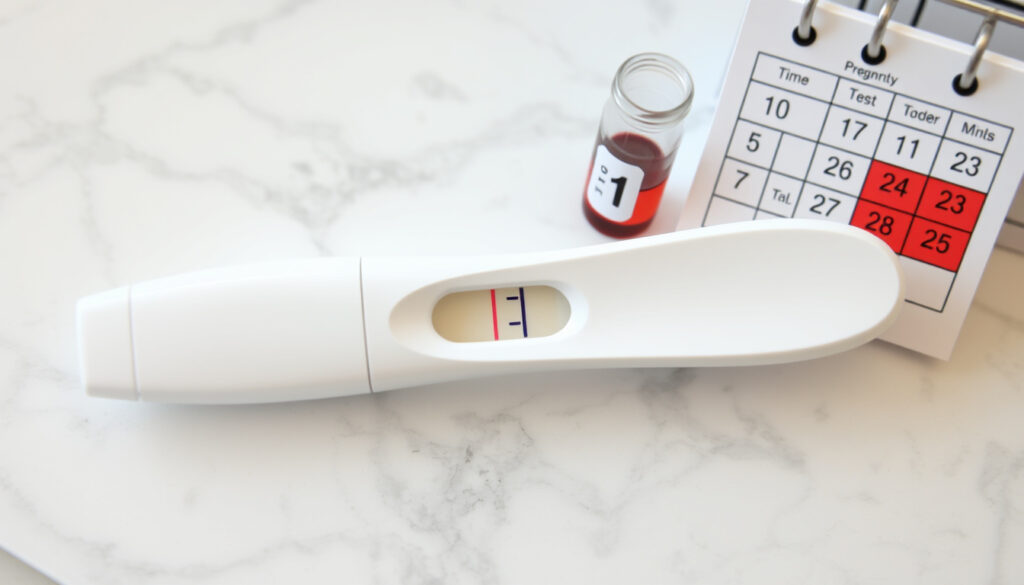
False Positive Pregnancy Test – Causes, Chances and Confirmation Steps
A false positive pregnancy test occurs when a home test indicates pregnancy but no actual pregnancy exists. These tests work by detecting human chorionic gonadotropin (hCG), a hormone produced during early pregnancy. Most home pregnancy tests claim up to 99% accuracy, yet false positives can still occur due to various factors including lingering hCG from a recent loss, test misinterpretation, or interfering substances in the body.
Understanding why false positives happen requires examining both common user errors and less frequent medical conditions. According to the Mayo Clinic, the circumstances surrounding a test can significantly impact results. Medical experts note that while false positives are considerably rarer than false negatives, they do occur with enough frequency that patients should understand potential causes.
What Can Cause a False Positive Pregnancy Test?
Primary Causes of False Positive Results
User error represents the most frequently encountered cause, typically involving reading results beyond the recommended time window, misinterpreting faint lines, or testing too soon after a miscarriage, abortion, or birth. Human chorionic gonadotropin from a prior pregnancy can persist in the body for four to six weeks following a loss.
Chemical pregnancy accounts for the most common reason a positive test does not progress to a viable pregnancy. According to CCRM Fertility, this occurs when an early pregnancy loss happens before ultrasound detection. The hormone rises briefly, producing a positive result followed by a period days to a week later. These affect approximately 25% of detected pregnancies but often go unnoticed when they occur before a woman suspects she is pregnant.
Waiting at least one week after a missed period before testing significantly reduces the likelihood of misleading results from chemical pregnancy or lingering hCG.
Understanding Evaporation Lines and Faint Lines
Evaporation lines present one of the most common sources of confusion. These colorless or faint gray lines appear in the test area after the designated reading window when urine evaporates from the surface. According to Bass Medical Group, these lines are especially common on non-digital tests, including certain Clearblue models. A true positive line typically appears pink or purple, while evaporation lines remain colorless or gray.
A faint line, by contrast, indicates genuinely low levels of hCG rather than a testing artifact. This thin, light pink line can signal an early pregnancy, a chemical pregnancy, or occasionally an evaporation line that has been present too long. According to HealthLine, a faint positive should never be dismissed without investigation. The recommendation remains consistent across medical sources: retest after 48 hours or confirm with a blood test.
True positive lines show color (pink or purple) and appear within the recommended reading window. Evaporation lines develop afterward, remain colorless or gray, and lack the saturation of an actual positive result.
| Fact | Details |
|---|---|
| Detection Hormone | hCG (human chorionic gonadotropin) |
| False Positive Rate | Rare, though chemical pregnancy common |
| Common Mimics | Medications, ovarian cysts |
| Confirmation Method | Quantitative blood hCG test |
What Are the Chances of a False Positive Pregnancy Test?
False positives occur far less frequently than false negatives, though exact probability figures are not definitively established in medical literature. According to Medical News Today, user error and recent pregnancy loss represent the most common triggers, while underlying medical conditions remain rare causes. Most manufacturers estimate their tests at 99% accurate when used correctly, meaning the false positive rate under ideal conditions falls well below one percent.
According to the Food and Drug Administration, home pregnancy tests are generally reliable, but their accuracy depends heavily on following instructions precisely. The FDA advises that results should always be confirmed through a healthcare provider, particularly when symptoms are present or when a woman has reason to believe the result may be inaccurate.
Factors That Increase Likelihood
Pregnancy-related causes represent the most common category of false positives. Beyond chemical pregnancy, a recent miscarriage or abortion can leave detectable hCG in the body for up to four weeks following the event. Incomplete miscarriages, where retained tissue continues producing hCG, may extend this window. Similarly, testing within days of giving birth can produce misleading positives as pregnancy hormones slowly leave the system.
Medications affect test results less frequently but remain a documented cause. Human chorionic gonadotropine injections used in fertility treatments represent the most significant pharmaceutical trigger. These are commonly administered as ovulation triggers and can remain detectable for days to weeks afterward. According to Ohio Health, antihistamines, antianxiety medications, antipsychotics, diuretics, Parkinson’s disease medications, methadone, aspirin, and carbamazepine may also interfere with test accuracy.
What Drugs or Cancers Can Cause a False Positive Pregnancy Test?
Medications That Trigger False Positives
Certain medications elevate hCG levels or interfere with test chemistry. Fertility treatments utilizing hCG injections, such as those prescribed for ovulation induction, directly introduce the hormone being detected. According to Clearblue, synthetic hCG found in some infertility, performance-enhancing, or weight loss medications can produce identical effects.
Diuretics and medications affecting hormone levels require particular awareness. Drugs used for anxiety, depression, or psychotic disorders may cross-react with test antibodies. According to research published in the National Institutes of Health database, carbamazepine and other seizure medications have also been documented as potential interferents. Women undergoing any medical treatment should discuss testing timing with their healthcare provider.
If you are taking fertility medications containing hCG or any hormone-affecting prescriptions, inform your healthcare provider before relying on home test results. A blood quantitative test provides more accurate assessment in these circumstances.
Medical Conditions Associated With False Positives
Medical conditions causing false positives remain rare but are well-documented in clinical literature. Ovarian cysts, including rare varieties, and tubo-ovarian abscesses can produce hCG or hCG-like substances. According to Clearblue, ovarian cysts among conditions that may lead to misleading results.
Kidney disease presents another documented cause. Chronic kidney disease, nephrotic syndrome, and infections such as pyelonephritis with staghorn calculus can affect hCG clearance and produce phantom hCG readings. The peer-reviewed case studies in medical databases confirm these associations, though they represent uncommon clinical scenarios.
Cancers present the most medically significant cause of false positives. According to research compiled by CCRM Fertility, germ cell ovarian tumors, gestational trophoblastic tumors, and placental site tumors can directly produce hCG. Among non-gestational cancers, lung cancer represents the most frequently documented source of phantom hCG, followed by urothelial bladder carcinoma and paraneoplastic syndromes.
Perimenopause, menopause, and postmenopause can naturally elevate hCG levels, creating conditions where faint positives may appear without pregnancy. Adenomyosis, urinary tract infections, and various hormone disorders similarly contribute to misleading results, though these remain less common than pharmaceutical or recent-pregnancy causes.
What Does a False Positive Pregnancy Test Look Like?
Visual identification of false positives requires understanding the appearance of both genuine and artifact results. Medical sources describe true positive lines as displaying pink or purple coloration within the recommended testing window. These lines develop because the antibodies in the test strip bind to hCG present in urine, creating a visible reaction.
Recognizing Evaporation Lines
An evaporation line presents as a faint, often colorless or gray mark that appears after the test window has closed. According to Bass Medical Group, these lines form when urine evaporates from the test strip, leaving behind residue that can be mistaken for a positive result. They are most commonly observed on non-digital tests and tend to appear in the same location where a true positive would develop.
Timing serves as the most reliable differentiator. Evaporation lines only appear after the recommended reading period, typically beyond three to ten minutes depending on the test brand. True positives generally appear within this window and display colored pigment rather than colorless residue.
Understanding Faint Positive Lines
A faint positive line differs from an evaporation line by exhibiting actual color, typically light pink. According to HealthLine, these faint lines indicate low but measurable levels of hCG, which may represent an early pregnancy, a chemical pregnancy, or a borderline test result. The line’s lightness alone does not determine whether pregnancy is viable.
Medical professionals recommend photographing any visible line for discussion with healthcare providers. Self-diagnosis based on home test appearance carries significant limitations, and persistent faint positives warrant professional follow-up regardless of apparent line intensity.
Can Sperm Cause a False Positive Pregnancy Test?
No evidence from medical literature supports the claim that sperm can cause a false positive pregnancy test. Home pregnancy tests are designed to detect human chorionic gonadotropin, a hormone that sperm does not produce or contain. The mechanism of these tests involves antibody binding specific to hCG molecules, which bear no resemblance to sperm cells or their components.
The confusion likely arises from misunderstandings about what these tests actually measure. Pregnancy tests detect a hormone produced exclusively by placental tissue following embryo implantation. Neither sperm present on a test strip nor semen contact with test components could trigger the antibody reaction that produces a positive result.
What Actually Causes Misleading Results
Rather than sperm, the documented causes of false positives include recent pregnancy loss, medications containing hCG or cross-reactive substances, and various medical conditions. According to the American College of Obstetricians and Gynecologists, home pregnancy tests, while generally reliable, require proper timing and following of instructions to achieve their stated accuracy.
Women who receive unexpected positive results should focus on confirmation through blood testing and medical evaluation rather than searching for alternative explanations. The circumstances most likely to produce false positives have nothing to do with sexual activity and everything to do with hormonal interference from pregnancy remnants, medications, or underlying health conditions.
When to Seek Medical Attention
Certain symptoms accompanying a positive test require immediate medical evaluation. Sharp pain in the abdomen or pelvis, vaginal bleeding, dizziness, or fainting may indicate ectopic pregnancy, a potentially dangerous condition where the fertilized egg implants outside the uterus. According to Pregnancy Options Miami, ectopic pregnancy requires urgent diagnosis through ultrasound and blood hCG monitoring.
Molar pregnancy, though rare, presents another serious condition that can produce markedly elevated hCG readings. This abnormal growth, known as hydatidiform mole, contains no viable fetus despite producing pregnancy hormones. Medical evaluation can distinguish between these conditions and a normal early pregnancy before complications develop.
Recommended Next Steps
For most women receiving a positive result, the appropriate response involves scheduling a confirmation appointment with a healthcare provider. According to the Cleveland Clinic, quantitative blood hCG testing measures exact hormone levels rather than simply detecting presence, along with ultrasound imaging to verify pregnancy location and viability.
If a positive result seems inconsistent with timing or circumstances, retesting after 48 hours provides valuable information. In early pregnancy, hCG levels should approximately double every two days. A blood test can confirm whether hormone levels are rising appropriately or declining, indicating a chemical pregnancy or other concerning pattern.
Establishing Certainty: What We Know and What Remains Unclear
Established Information
- False positives occur but remain uncommon
- User error represents the most frequent cause
- Recent pregnancy loss can elevate hCG for weeks
- Chemical pregnancy affects roughly 25% of detected pregnancies
- Medications containing hCG trigger false positives
- Evaporation lines cause many perceived false positives
- Blood testing provides definitive confirmation
Information That Remains Unclear
- Exact statistical probability of false positives
- Precise duration of hCG persistence after different types of loss
- Full list of medications that may interfere
- Threshold hCG levels for positive results across all brands
- How dilution of urine affects different test sensitivities
- Long-term outcomes following chemical pregnancy
How Pregnancy Tests Work: The Science Behind Detection
Understanding why false positives occur requires basic knowledge of test chemistry. Home pregnancy tests contain antibodies designed to bind specifically to human chorionic gonadotropin. When hCG is present in urine, these antibodies activate, producing a visible line or digital display. This lock-and-key mechanism means the test should only respond to hCG and nothing else.
However, antibody specificity is not absolute. Some substances closely resembling hCG, certain medications, or abnormal proteins produced by medical conditions can trigger similar reactions. This cross-reactivity explains why medical conditions rarely but genuinely produce false positives, even when no pregnancy exists.
The sensitivity of different test brands varies considerably. Some tests detect hCG at levels as low as 10 mIU/mL, while others require 25 mIU/mL or higher. This variation means that what appears as a strong positive on one brand might show only a faint line on another, or that very early pregnancy might register differently depending on which test is used.
Expert Perspectives on False Positive Prevalence
“Home pregnancy tests are highly accurate when used correctly, but no test is perfect. Women should understand that a positive result—particularly one that does not seem consistent with their situation—warrants professional follow-up.”
— Mayo Clinic Editorial Team
“The vast majority of false positives trace back to user error or recent pregnancy loss rather than any underlying pathology. Medical causes exist but remain genuinely uncommon in clinical practice.”
— CCRM Fertility Medical Team
“Taking a photo of your test to discuss with your provider can be helpful, but visual inspection alone cannot definitively determine pregnancy viability or rule out false positives.”
— HealthLine Medical Review Board
Summary and Action Steps
False positive pregnancy tests, while uncommon, occur through well-documented mechanisms including user error, recent pregnancy loss, medication interference, and rare medical conditions. Understanding these causes empowers women to interpret results appropriately and seek confirmatory testing when indicated.
The most important takeaways involve recognizing that evaporation lines differ from true positives, that faint lines warrant investigation rather than dismissal, and that any positive result should be confirmed through a healthcare provider. For those experiencing swollen feet and ankles or other concerning symptoms alongside a positive test, prompt medical evaluation is essential.
When in doubt, waiting 48 hours and retesting provides valuable comparative information. Blood quantitative testing offers definitive confirmation regardless of home test appearance. Women on medications that may affect results or those recovering from recent pregnancy loss should discuss optimal testing timing with their healthcare provider to minimize misleading results.
Can I get a false positive pregnancy test?
Yes, false positives can occur. The most common causes include reading results too late, recent miscarriage or abortion with lingering hCG, fertility medications containing hCG, and rare medical conditions such as ovarian cysts or certain cancers.
What does a false positive pregnancy test look like?
A false positive typically appears as a line that develops due to an error rather than actual hCG presence. Evaporation lines show as colorless or gray marks appearing after the test window, while certain medications or medical conditions can produce genuine-looking but misleading positives.
How long after a miscarriage can I get a false positive?
Human chorionic gonadotropin can remain detectable for four to six weeks following a pregnancy loss, depending on the type of loss and individual hormone clearance rates. Testing during this period commonly produces positive results without indicating a new pregnancy.
What medications cause false positive pregnancy tests?
Medications containing hCG, such as fertility injections, represent the primary pharmaceutical cause. Additional interferents include antihistamines, antipsychotics, antianxiety medications, diuretics, Parkinson’s drugs, methadone, aspirin, and carbamazepine.
Can Clearblue pregnancy tests give false positives?
Like all home pregnancy tests, Clearblue tests can produce false positives under specific circumstances including recent pregnancy, certain ovarian cysts, kidney disease, cancers, hormone disorders, or hCG medications. Following instructions precisely and reading results within the recommended window minimizes this risk.
Should I retest after getting a positive result?
Retesting after 48 hours provides useful comparative information as hCG levels should approximately double in early pregnancy. However, scheduling a healthcare provider appointment for blood testing and confirmation remains the most reliable approach to verify any positive home test result.
Can a faint line be a false positive?
A faint line may indicate low but genuine hCG from early pregnancy or chemical pregnancy. It can also represent an evaporation line if it appears after the reading window. The safest approach involves treating any visible line as a potential positive and confirming with a healthcare provider.
More related posts
 Iberostar Club Cala Barca – Family Resort Guide
 Swollen Feet and Ankles – Causes, Remedies and Red Flags
 The Artful Dodger Season 2 – Release Date, Cast & Streaming
 Bank of England Base Rate History – Timeline from 1694
 Cast of the Penguin – Full List of Actors and Characters
 Coronation Street Philip Lowrie – Dennis Tanner Actor Dies at 88
 Wu Yize – From Sacrifice to World Snooker Glory
 Five Nights at Freddy’s Security Breach – Full Guide 2025
